
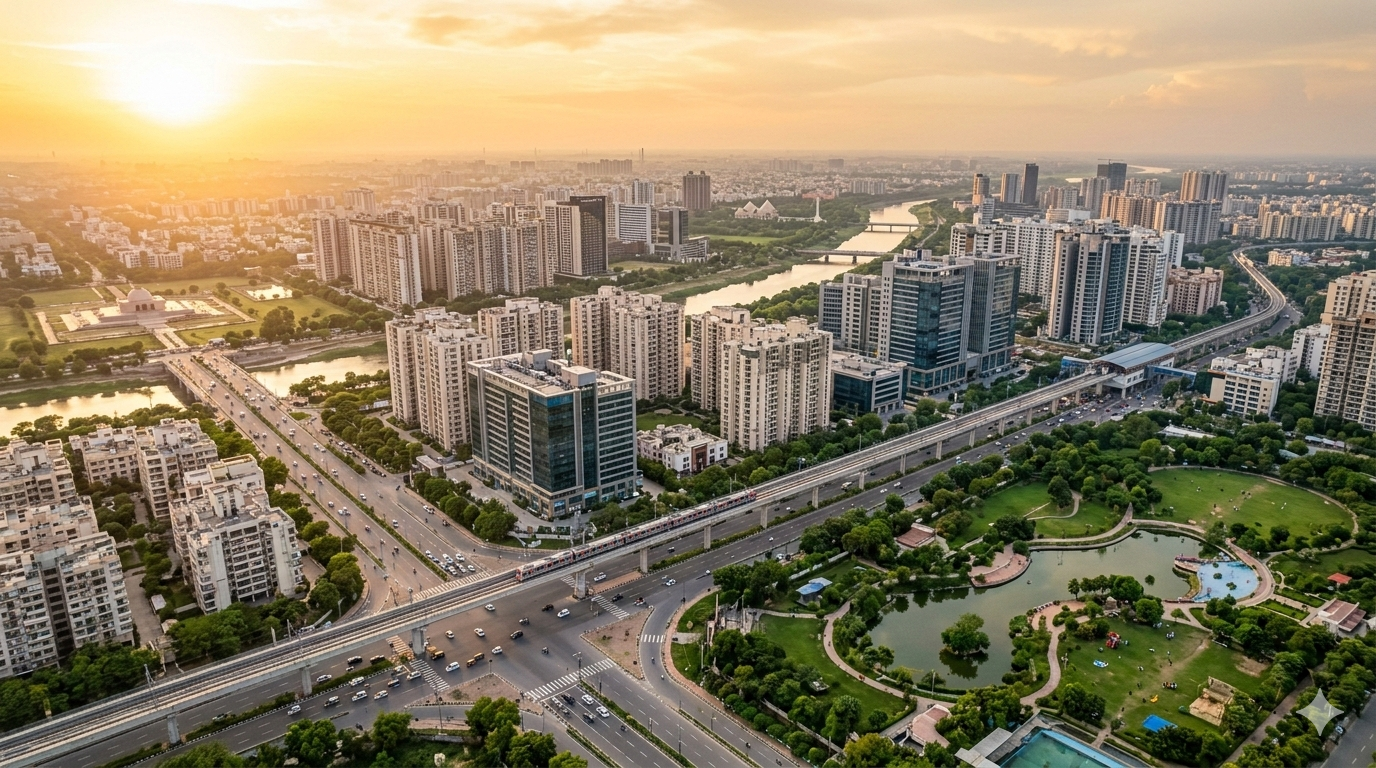
Cost of Living in Lucknow 2026: The Ultimate Budget Guide | DSD Properties
Sources: Numbeo & livingcost.org (Lucknow + cross-city comparisons, 2026), MVVNL/UPERC Tariff Schedule FY 2026-27, UPMRC (Lucknow Metro), Goodreturns (fuel & LPG, June 2026), Remitly & godigit cost-of-living India 2026, and DSD Properties field data — verified June 2026.
Thinking of moving to Lucknow in 2026? The honest answer to "how much will it cost me to live here?" is: far less than Delhi or Noida — but "affordable" now depends heavily on which side of the city you pick.
As the NCR gets more congested and expensive, Lucknow has become the default landing spot for professionals, returning families, and first-time homebuyers who want a tier-1 lifestyle without a tier-1 price tag. But with new high-rises along Shaheed Path and the Sultanpur Road IT belt pushing premium rents upward, a budget that works in Mohanlalganj looks very different from one that works in Gomti Nagar.
This guide breaks down the real, line-by-line cost of living in Lucknow for 2026 — rent by locality, groceries, electricity and gas, transport, healthcare, schooling and domestic help — using verified 2026 tariffs and on-ground numbers, not generic estimates. By the end you will know roughly what a bachelor, a couple, and a family of four each need every month, and which neighbourhood matches your budget.
Cost of Living in Lucknow 2026 — The Quick Take
- A comfortable lifestyle for a family of four runs roughly ₹45,000–₹75,000/month; a bachelor manages on ₹18,000–₹25,000.
- Rent is the single biggest lever — the same 2 BHK is ₹22,000+ in Gomti Nagar but ₹12,000 in Vrindavan Yojna or Mohanlalganj.
- Utilities are modest: MVVNL domestic power starts at ₹5.50/unit, a 14.2 kg LPG cylinder is ₹979.50 (June 2026), and 60 Mbps+ broadband is ₹500–₹1,000.
- Lucknow is about 30% cheaper than Noida/Gurgaon — the gap is widest on housing, domestic help, and local produce.
- The biggest budget surprises are one-time: security deposit, brokerage, and society move-in charges. Plan for them upfront.
Housing & Rent — The Number That Decides Your Budget
Rent is where Lucknow budgets are won or lost. Prime sectors have seen steady rental appreciation, but the city still rewards anyone willing to live 15–20 minutes further out. Understanding the micro-markets is the difference between overpaying and getting genuine value. If you are weighing renting against buying, our stamp duty & registration cost guide shows the true one-time cost of ownership before you decide.
Typical Rental Brackets (2026)
- Single room / 1 RK: ₹4,000–₹8,000 — students and bachelors.
- 1 BHK: ₹10,000–₹16,000 — young professionals in developed sectors.
- 2 BHK: ₹15,000–₹28,000 — the most-rented family format.
- 3 BHK (gated society): ₹25,000–₹55,000 — high-end comfort with amenities.
Rent by Locality — 2026 Benchmarks
| Locality | 1 BHK | 2 BHK | 3 BHK | Why People Pick It |
|---|---|---|---|---|
| Gomti Nagar (Main) | ₹12K–18K | ₹22K–35K | ₹35K–60K | Premium, self-contained, deep resale market. |
| Gomti Nagar Extension | ₹10K–15K | ₹18K–30K | ₹28K–48K | Modern high-rises, strongest rental demand in the city. |
| Shaheed Path Belt | ₹9K–14K | ₹16K–26K | ₹24K–40K | Best connectivity to airport & IT hubs. |
| Vrindavan Yojna | ₹7K–11K | ₹12K–20K | ₹18K–30K | Planned UPAVP township, near SGPGI/PGI. |
| Mohanlalganj | ₹5K–8K | ₹10K–16K | ₹15K–25K | Most affordable, fastest-growing southern fringe. |
Rent figures are DSD field estimates for furnished/semi-furnished units in established gated stock, June 2026. Independent/builder-floor units sit 10–20% lower.
A few practical points shape the real number you pay. Furnished flats command a 15–25% premium over bare-shell units, so if you already own basic furniture an unfurnished lease saves meaningfully over a year. Independent builder-floors are usually cheaper than gated-society apartments of the same size, but you trade away security, lifts, power backup and maintenance — costs that then resurface elsewhere in your budget. And if you expect to stay more than four or five years, the rent-versus-buy maths often tips toward buying, because rents in the better sectors keep climbing while a home-loan EMI stays fixed.
For a fuller picture of which neighbourhoods carry which lifestyle premium, see our guide to the posh areas of Lucknow.
A Realistic Monthly Budget — Three Profiles
Averages hide more than they reveal. Here is what a typical month actually looks like for three common households, built bottom-up from real 2026 prices. Treat these as mid-range, sensible lifestyles — not bare-survival, not luxury.
The Bachelor / Young Professional
A single working professional renting a 1 RK or sharing a 2 BHK in a developed sector. Rent ₹6,000–₹9,000 (or shared), groceries and home-cooked food ₹4,000–₹6,000, eating out and ordering in ₹3,000–₹5,000, electricity and internet ₹1,200–₹2,000, metro/petrol ₹1,500–₹2,500, mobile and subscriptions ₹600–₹1,000, plus a buffer for outings.
📍 Where it stretches furthest
Shaheed Path belt and Vrindavan Yojna give the best rent-to-commute trade-off for IT and healthcare workers. Sharing a 2 BHK can cut your housing cost almost in half.
The Couple (Both Working, No Kids)
A dual-income couple in a 2 BHK gated society. Rent ₹15,000–₹22,000, groceries ₹6,000–₹9,000, dining and leisure ₹5,000–₹8,000, utilities (power + LPG + water + broadband) ₹3,000–₹5,000, combined transport ₹3,000–₹5,000, and a part-time maid ₹2,500–₹4,000. Two incomes make this the most comfortable phase financially, with real room to save.
The Family of Four
Two adults and two school-going children in a 2–3 BHK. Rent ₹18,000–₹30,000, groceries ₹10,000–₹15,000, school fees ₹6,000–₹18,000 (two children, mid-tier), utilities ₹4,000–₹7,000, transport ₹4,000–₹7,000, domestic help ₹4,000–₹7,000, healthcare and insurance ₹3,000–₹5,000, plus leisure. Schooling and rent together typically make up well over half the monthly outflow.
📍 The family money-saver
Choosing Vrindavan Yojna or Mohanlalganj over central Gomti Nagar can free up ₹10,000+ a month — enough to cover one child's school fees entirely.
What Salary Do You Need to Live Comfortably?
Working back from the monthly budgets above, here is what those numbers translate to in salary terms — net, in-hand, after tax. A single professional spending around ₹22,000 a month comfortably needs a net salary of roughly ₹35,000–₹40,000, which leaves room for savings, an SIP, and the occasional indulgence. A working couple targeting a ₹40,000 lifestyle wants a combined in-hand of about ₹70,000–₹85,000 depending on rent and how much they cook at home. A family of four aiming for the ₹60,000 mid-range — rent, school fees, help and a little leisure — sensibly needs a household in-hand of at least ₹1,00,000–₹1,20,000 a month to stay ahead of inflation and build a meaningful corpus.
Two practical points to factor in. First, the gross-to-net swing matters more than people expect: a ₹15 lakh-per-annum gross job translates to roughly ₹1,00,000 in-hand after standard deductions, not the ₹1,25,000 the gross might suggest. Second, plan for irregular but real annual costs — health insurance premiums, property tax, school admission, vehicle insurance and at least one family trip — by setting aside roughly one extra month's expenses each year as a buffer. Households that fund this buffer monthly rather than scrambling for it in March are the ones whose Lucknow budgets actually hold up.
Food & Groceries
Lucknow's proximity to fertile agricultural belts keeps fresh produce cheap, and grocery inflation in 2026 has stayed relatively stable. A family of four typically spends ₹8,000–₹15,000/month on groceries depending on how much they cook at home versus order in; a couple lands around ₹6,000–₹9,000, and a bachelor cooking occasionally needs ₹3,000–₹5,000.
To make the grocery number concrete: a family's monthly basket of staples — atta, rice, dal, cooking oil, milk, seasonal vegetables, fruit and basic toiletries — typically lands around ₹8,000–₹12,000 when bought from local mandis and kirana stores, the cheapest route in the city. Shopping the same basket through branded supermarkets or quick-commerce apps adds roughly 15–25%, the convenience premium you pay for doorstep delivery. Households that mix mandi runs for produce with apps for top-ups tend to get the best of both.
Dining out is where Lucknow shines — it is, after all, a gastronomical capital. A signature meal at a legacy Awadhi spot or a street-food crawl in Chowk runs just ₹100–₹250 per person, while a sit-down meal for two at a mid-range restaurant in Hazratganj or Gomti Nagar averages ₹1,000–₹1,800. Modern organic supermarkets and quick-commerce apps cost more but are widely available across the newer sectors.
Utilities & Monthly Bills
Utilities are one of the areas where Lucknow stays genuinely affordable — but summer electricity is the swing factor. Lucknow is served by MVVNL (Madhyanchal Vidyut Vitran Nigam), under the UPERC FY 2026-27 tariff.
Electricity (MVVNL, Urban Domestic)
Tiered slabs: ₹5.50/unit for the first 150 units, ₹6.00 for 151–300, and ₹6.50 above 300, plus a fixed charge of ₹110/kW of sanctioned load, 5% electricity duty and ₹15 meter rent. A modest 200-unit month works out to roughly ₹1,010. A 2 BHK running two ACs through peak summer can reach ₹4,000–₹7,000.
Check or pay at mvvnl.in or the UPPCL Smart Consumer appCooking Gas (LPG / PNG)
A 14.2 kg domestic LPG cylinder in Lucknow is ₹979.50 (June 2026); a 5 kg cylinder is ₹363. A typical family uses about one cylinder a month. Where piped natural gas (PNG) is available in newer townships, monthly cooking gas usually works out cheaper.
Internet, Water & Mobile
Unlimited 60 Mbps+ fibre broadband costs ₹500–₹1,000/month. Municipal water charges are modest, though some outer sectors rely on tanker top-ups in summer. Mobile plans add roughly ₹200–₹400 per person. Gated societies layer on a maintenance charge of ₹2–₹4 per sq ft, which on a 1,200 sq ft flat means ₹2,400–₹4,800/month.
Two things to watch on the power bill. First, UP adds a variable fuel-and-power surcharge (FPPAS) that moves with coal and gas prices and can lift the energy charge by 8–12% in some months. Second, with smart meters now rolling out across Lucknow, billing has become more accurate — which means homes that previously benefited from under-reading will see truer, sometimes higher, bills. Budgeting for the summer peak rather than the winter average keeps you from being caught out.
Transport & Commute
Commuting has eased sharply with the Lucknow Metro and the Outer Ring Road. The Metro Red Line (CCS Airport to Munshi Pulia, 21 stations) uses station-based fares from ₹10 to a maximum of ₹60, and a GoSmart card knocks 10% off every ride — a daily commuter typically spends ₹1,200–₹2,400/month. Phase-2 (Charbagh–Vasant Kunj) received ₹1,450 crore in the Union Budget 2026-27, so coverage will widen further.
For those who drive, petrol in Lucknow is around ₹101.86/litre and diesel ₹95.36/litre (June 2026). Auto and e-rickshaw rides remain cheap for short hops, while app cabs cost more during peak hours. If you are choosing a home around the metro, our Sultanpur Road hotspot guide explains how the ring road has compressed commute times across the southern corridor.
If you run a car, build in more than just fuel. A typical mid-size petrol car covering 1,000–1,200 km a month burns ₹6,000–₹8,000 in fuel alone, before servicing, insurance and parking — so a realistic all-in car cost is closer to ₹9,000–₹12,000/month once everything is counted. For most single commuters on a fixed route, the metro plus the occasional auto works out cheaper and faster than owning a second vehicle. Short auto and e-rickshaw hops typically cost ₹20–₹60, which keeps day-to-day local movement inexpensive.
Lucknow vs the Metros — How Far Your Money Goes
The headline reason people move to Lucknow is purchasing power. Cross-city comparison data puts it plainly: the lifestyle you would fund with around ₹1.7 lakh a month in Delhi can be matched in Lucknow for roughly ₹1.2 lakh, largely because rent and services cost so much less here. The gap is widest exactly where families feel it most — a 3 BHK that rents for ₹35,000 in Gomti Nagar would command well over double that in comparable Gurgaon or south Delhi addresses, and full-time domestic help that is a ₹5,000 line item in Lucknow can cost three to four times as much in the NCR.
| Line Item (mid-tier lifestyle) | Lucknow | Delhi NCR | Bengaluru | Mumbai |
|---|---|---|---|---|
| 2 BHK rent (developed sector) | ₹18K–28K | ₹30K–55K | ₹35K–60K | ₹55K–1.2L |
| Family groceries / month | ₹10K–15K | ₹14K–20K | ₹14K–20K | ₹15K–22K |
| Part-time maid | ₹2.5K–5K | ₹6K–12K | ₹7K–14K | ₹8K–15K |
| Full-time driver | ₹12K–18K | ₹18K–25K | ₹20K–28K | ₹22K–30K |
| Premium school / child / month | ₹9K–25K | ₹15K–45K | ₹18K–50K | ₹20K–60K |
| Family of 4 total / month | ₹45K–75K | ₹85K–1.4L | ₹90K–1.6L | ₹1.1L–1.9L |
Directional comparison drawn from Numbeo cross-city indices, Remitly 2026 cost-of-living data, and DSD field aggregates. Treat as orientation, not exact quotes.
One counter-intuitive surprise sits inside that table: UP's state tax structure actually makes petrol and LPG slightly costlier in Lucknow than in Delhi. So you do not save on fuel at the pump or in the kitchen. But the gap on rent, groceries, schools and domestic help is so wide that it overwhelms those small drags, leaving a typical family-of-four monthly outflow roughly 35–50% below the NCR and Bengaluru benchmarks, and a fraction of Mumbai. In some Mumbai neighbourhoods a full Lucknow family budget is smaller than the rent on a single 1 BHK.
The trade-offs are honest ones: fewer ultra-premium dining and nightlife options than a metro, and a job market that, while growing fast on the back of the IT City and Wellness City corridors, is still smaller than Bengaluru or the NCR. For remote workers, returning families, retirees and anyone whose income is not strictly tied to a metro office, that trade is increasingly easy to make.
Healthcare, Schooling & Domestic Help
Healthcare: Lucknow is the medical hub of North India, anchored by SGPGI, KGMU, RMLIMS, Medanta and Max Super Specialty. A GP consultation runs ₹300–₹800 and a specialist ₹800–₹1,500; private medical costs have risen 12–15% recently, so a family floater health policy (₹5–10 lakh cover) at roughly ₹12,000–₹25,000/year is a sensible line item rather than an optional one. Government-run KGMU and SGPGI cost a fraction of private chains but typically involve long queues, so most families pair a low-cost public-hospital fallback with a private insurance policy for surgeries and emergencies.
Schooling: This is often the single largest family expense after rent. Budget private schools run ₹1,500–₹4,000/month per child, mid-tier schools ₹4,000–₹9,000, and premium institutions — Delhi Public School, City Montessori School, La Martiniere, Seth M.R. Jaipuria, St. Francis College — ₹9,000–₹25,000/month, before admission and transport fees. Areas like Gomti Nagar and Indira Nagar are favoured precisely because of school density and shorter bus routes.
Domestic help: One of the biggest reasons Lucknow feels affordable versus the NCR. A part-time maid for cleaning is ₹2,500–₹5,000/month, a cook ₹3,000–₹6,000, and a full-time driver ₹12,000–₹18,000. Most middle-class households keep at least part-time help comfortably within budget. Hiring directly through a society guard or neighbour reference is cheaper than going through a staffing agency, though agencies provide background-verified replacements if your hire drops out.
Entertainment, Gym & Lifestyle
Lucknow's lifestyle quality has caught up sharply with metros, particularly along the Gomti Nagar / Shaheed Path belt. The line items add up but stay friendlier than NCR or Bengaluru.
Movies and malls: A weekend show at PVR, INOX or Wave Cinemas inside Phoenix Palassio, Lulu Mall or Fun Cinemas runs ₹200–₹400 per person for standard seats, with premium recliners and IMAX-style formats ₹450–₹700. A family-of-four mall outing — tickets, popcorn, dinner at a mid-range restaurant — comfortably lands at ₹3,000–₹4,500.
Gym and fitness: A neighbourhood gym is ₹800–₹1,500/month; premium chains like Cult.fit, Anytime Fitness or Gold's Gym cost ₹1,500–₹3,500 depending on plan length. Yoga studios charge ₹2,000–₹4,000 monthly, and CrossFit or group cycling ₹3,500–₹6,000. Sports clubs in older sectors (annual memberships ₹15,000–₹50,000) remain a Lucknow lifestyle staple.
Streaming and subscriptions: A typical household combination of Netflix, Hotstar/Disney+, Prime Video and a music service lands around ₹600–₹1,200 per month.
Weekend trips and festive spending: Lucknow's central location is a quietly underrated advantage — Ayodhya, Varanasi, Naimisharanya and Chitrakoot are all within 200 km, putting a weekend family road trip at ₹3,500–₹6,000 inclusive of fuel, food and budget stays. Festive months — Diwali, Eid, the wedding season — add a one-off spike of ₹15,000–₹40,000 a year that is best amortised monthly rather than absorbed in one shot.
How Your Budget Shifts Across the Year
Lucknow's seasonal cost swing is real, and budgeting for the annual average instead of the month-by-month reality is exactly how households end up short in May and June. The four-season picture looks like this.
Summer (April–June): The dominant swing factor. Two AC units running 8–10 hours daily push electricity into the ₹4,000–₹7,000 band, and water-tanker top-ups in outer sectors add ₹500–₹1,500. Total monthly outflow can rise ₹4,000–₹6,000 above your "normal" baseline. Plan for it.
Monsoon (July–September): Power bills drop sharply, but waterlogging in certain sectors and increased private transport on bad-weather days add roughly ₹1,500–₹3,000. Some older flats see seepage-related repair calls — a one-off ₹2,000–₹6,000 line you only discover when it happens.
Winter (November–February): The cheapest stretch of the year. Geysers replace ACs but draw less, and total utilities settle 25–30% below the summer peak. This is the right window to save aggressively or pre-fund the next summer cycle.
Festive season (October–November): Diwali, Karwa Chauth, Bhaiya Dooj and the wedding-season build-up typically add ₹15,000–₹40,000 in one-off spending across gifts, sweets, decor, clothing and family events. Budget for it as a separate annual line rather than letting it eat into monthly cash flow.
One-Time Setup Costs — What You Need Before Day One
Move-in costs are the single most under-estimated line in a Lucknow rental budget. Across our enquiries, people routinely undershoot the upfront amount by ₹50,000–₹1,50,000. Here is the realistic checklist for renting a 2 BHK in a developed sector.
Security Deposit (Refundable)
Typically 2–3 months'' rent. On a ₹25,000/month 2 BHK that is ₹50,000–₹75,000 locked in for the duration of the lease. Refundable at exit minus any agreed deductions — get the deduction list documented at move-in, not move-out, to avoid disputes later.
Brokerage
Around one month's rent, payable on signing. Some platforms now offer zero-brokerage rentals, which can save you a full month — worth checking before paying. Direct-from-owner listings also avoid this cost entirely if you can find the right one.
Furniture & Appliances
An unfurnished 2 BHK needs roughly ₹50,000–₹1,00,000 in basics: bed and mattress, sofa, dining set, wardrobe, fridge, washing machine, microwave and a basic kitchen kit. Renting furniture through services like Rentomojo or Furlenco costs ₹3,000–₹6,000/month — sensible if you may move within a year, expensive over three.
Connections & Society Charges
New electricity connection (₹2,000–₹5,000 if not already active), broadband installation (₹1,000–₹3,000 plus first month's charges), gas connection or society piped-gas registration (₹3,000–₹6,000 with security), and society move-in / interior-deposit charges that vary widely (₹5,000–₹25,000). Confirm the last item with the RWA before the move — it is rarely listed upfront.
Budget Traps to Watch Before You Sign
🚨 The "all-inclusive rent" myth
Quoted rent rarely includes society maintenance, which can add ₹2,400–₹4,800/month on a larger flat. Always ask whether maintenance is included or extra before agreeing on a number.
🚨 Security deposit lock-in
Lucknow landlords commonly ask for 2–3 months'' rent as a refundable deposit. On a ₹25,000 flat that is ₹50,000–₹75,000 blocked upfront — budget for it alongside the first month.
🚨 Brokerage you did not plan for
Agents typically charge around one month's rent as brokerage. Factor it into your move-in cost rather than discovering it on signing day.
🚨 Summer electricity shock
A bill that is ₹1,000 in winter can cross ₹6,000 in May–June once two ACs run. If you are renting a top-floor or west-facing flat, assume the higher figure when budgeting.
🚨 One-time society move-in charges
Many gated societies levy a non-refundable move-in/registration fee and may require a separate interior-deposit. Confirm these with the RWA before you commit.
So, Is Lucknow Affordable in 2026?
Yes — but with a caveat. Lucknow remains one of the best-value tier-2 cities in India, and a family that earns a metro salary while living here can save aggressively. The caveat is that "Lucknow" is no longer a single price point. Choosing between Gomti Nagar and Vrindavan Yojna, between a furnished society flat and an independent floor, between two cars and a metro pass, can swing a household budget by ₹15,000–₹20,000 a month. The number on this page is a map, not a verdict — your actual cost is decided by the handful of choices you make about where and how you live.
That is exactly where local, on-ground advice pays for itself many times over — matching your real budget to the right neighbourhood, and making sure the rent you agree to is the rent you actually end up paying.
How DSD Properties Helps You Settle In
From budget to the right neighbourhood — without the guesswork
- We match your monthly budget to the right locality, so you do not overpay for an address you do not need.
- We surface the real all-in cost of a rental — maintenance, deposit and brokerage included — before you sign.
- If you are deciding between renting and buying, we walk you through the true ownership math for your budget.
- Every plot or flat we recommend is checked for clear title and approvals — the same diligence behind our verification service.
Leave a Comment